
What's the Demand for Pool Service Businesses in 2026?
 Doreen Morgan : Jul 27, 2026, 4:29:59 PM
Discover what's driving buyer demand for pool service businesses in 2026, what buyers look for before making an offer, and how current market...

Selling a pest control business starts well before it goes to market. Effective exit planning typically begins 12 to 24 months before a sale, giving owners time to improve profitability, reduce buyer concerns, strengthen transferability, and position the business for a stronger valuation. Waiting until you're ready to sell often limits the improvements buyers are willing to recognize.
Exit planning allows pest control business owners to evaluate their company through a buyer's eyes. Buyers assess recurring revenue, customer retention, technician stability, management depth, route efficiency, financial reporting, and owner dependence before determining value. Many of these factors require time to improve, making early preparation one of the most effective ways to strengthen buyer confidence and negotiate better deal terms.
The industry's recurring revenue model continues to support buyer interest. According to the National Pest Management Association's 2025 Pest Control Industry Cost Study, recurring revenue represented 74% of total income among participating pest management companies. Businesses with predictable cash flow, organized operations, and transferable customer relationships are generally better positioned to attract qualified buyers and navigate due diligence successfully.
Many pest control business owners begin thinking about a sale when retirement approaches, they're ready for a career change, or an unexpected opportunity arises. By then, many of the factors that influence valuation have already been established. Buyers review financial performance over multiple years, recurring revenue trends, employee stability, and operational consistency to understand how the business has performed over time.
Starting your exit planning 12 to 24 months before a sale gives you time to improve the areas buyers examine most closely. Financial reporting becomes more consistent, recurring customer relationships become easier to demonstrate, and operational improvements have time to produce measurable results. Those changes become part of the company's track record instead of future plans that buyers cannot verify.
Planning ahead also gives you more control over the timing of a sale. If market conditions change or an unexpected buyer approaches, you'll have a clearer understanding of your business and fewer operational issues to resolve before entering negotiations.
Owners who want an objective assessment of their readiness before going to market can benefit from working with Pest Control Business Brokers who understand how buyers evaluate pest control companies and can identify opportunities to strengthen transferability before the sale process begins.
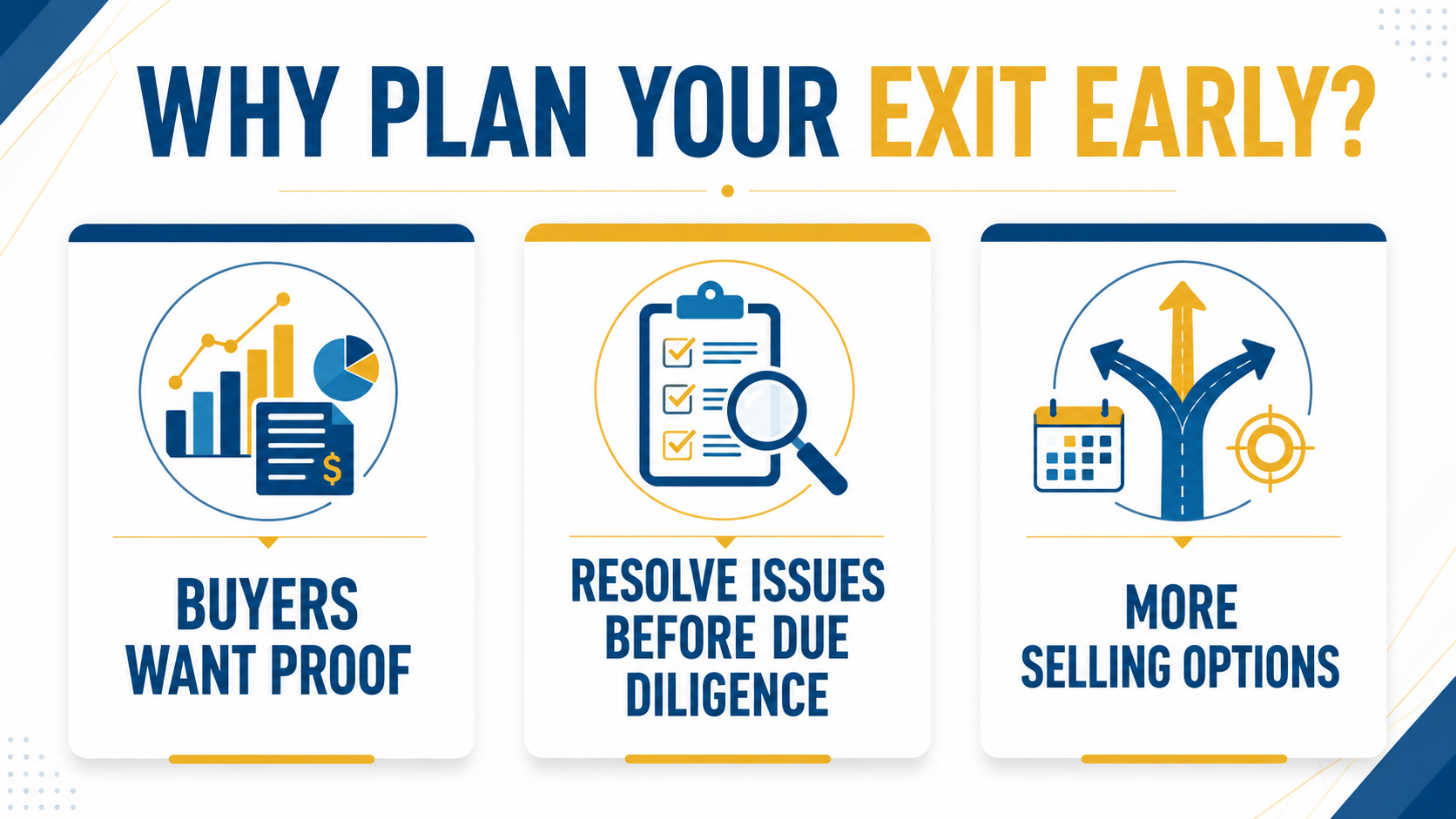
Buyers want confidence that a pest control business will continue generating cash flow after the owner exits. They look for evidence that customers will stay with the business, employees can operate successfully without the owner, and financial performance is sustainable.
Growing revenue is only part of the equation. Buyers also review customer retention, recurring service agreements, pricing history, technician stability, documented operating procedures, and the systems that keep the business running day to day. Those factors help them assess whether recent performance is likely to continue after closing.
Most buyers aren't looking for one dramatic improvement before making an offer. They're evaluating whether the business has demonstrated consistent financial performance, reliable operations, and a smooth transition path to new ownership.
Read More: How Buyers Evaluate Risk and What It Means For Your Valuation
Every business has areas that deserve attention before going to market. Exit planning provides enough time to identify those issues, decide which improvements will have the greatest impact, and address them before buyers begin reviewing the business.
For a pest control company, that may include improving customer retention, reducing technician turnover, documenting operating procedures, organizing financial records, strengthening management responsibilities, or reducing the owner's involvement in daily field operations. Most of these improvements require consistent execution over time rather than a quick fix before listing the business.
Addressing these issues early also gives owners more control during negotiations. Instead of explaining why a problem exists, you have an opportunity to show how it was identified, corrected, and reflected in the company's performance.
Starting the exit planning process doesn't mean you have to sell on a specific date. It gives you the flexibility to decide when the business is ready and to respond to opportunities as they arise.
One owner may spend another two years improving profitability before going to market. Another may receive an unsolicited offer and already have organized financial records, documented systems, and a clear understanding of the company's value. In both situations, preparation gives the owner more choices than starting the process after deciding to sell.
Early planning also makes it easier to assemble an advisory team, obtain a professional valuation, prepare due diligence materials, and understand potential deal structures before negotiations begin. Completing those steps before buyers are involved allows owners to focus on evaluating offers rather than gathering information under tight deadlines.
Many owners begin preparing for a sale only after they've decided it's time to exit. While some improvements can be made quickly, many of the factors that influence valuation and buyer confidence require consistent performance over time. Buyers want to see a track record they can verify, not improvements that appeared just before the business was listed.
The following issues commonly surface during due diligence and can influence valuation, deal structure, or whether a transaction reaches the closing table.
Many owners underestimate how long meaningful improvements take. Increasing profitability, reducing owner dependence, improving customer retention, and building stronger financial reporting usually require months, not weeks, of consistent execution.
Waiting until the business is already on the market often shifts the conversation from demonstrating strengths to explaining weaknesses. Buyers place more confidence in improvements that appear across several reporting periods than changes made immediately before a sale.
Revenue attracts attention, but cash flow drives valuation. Two pest control businesses with similar annual revenue may receive very different offers if one consistently generates stronger adjusted EBITDA or Seller's Discretionary Earnings (SDE).
During due diligence, buyers examine pricing, recurring service profitability, technician productivity, direct costs, and overhead expenses to understand how efficiently the business converts revenue into earnings. Improving profitability before going to market often has a greater impact on value than adding more customers with lower margins.
Read More: Increase EBITDA Before Selling Your Business: 7-Step Playbook
In many pest control businesses, the owner manages key customer relationships, approves estimates, oversees technicians, and resolves operational issues. That involvement may have contributed to the company's success, but it also increases transition risk for a buyer.
Owners who gradually delegate responsibilities, document procedures, and develop supervisors or office managers create a business that can operate more independently. Buyers are generally more comfortable acquiring a company when they can see how operations will continue after the owner's departure.
Due diligence is designed to verify information, not organize it. When financial statements, customer agreements, employee records, licenses, or operating procedures are incomplete or difficult to locate, buyers often ask additional questions and spend more time validating the business.
Preparing documentation before going to market creates a more efficient sale process. It also allows owners to identify missing information and correct inconsistencies before buyers discover them.
The pest control industry continues to attract strategic buyers, private equity firms, and individual acquirers, particularly businesses with recurring revenue and established service territories. That demand creates opportunities, but it doesn't eliminate operational risk.
Buyers still compare multiple acquisition opportunities before making an offer. A company with organized financial records, stable technicians, documented systems, and limited owner dependence will often present less risk than a similar business that lacks those qualities. Strong buyer demand can increase interest, but preparation still influences valuation, negotiations, and the likelihood of closing.
Many owners associate exit planning with increasing valuation, but the benefits extend beyond purchase price. Preparing a pest control business well before going to market can improve buyer confidence, simplify due diligence, reduce transaction risk, and create a more competitive sale process.
When buyers understand how the business operates, trust the financial information, and see a clear path for a successful ownership transition, negotiations often become more straightforward. Instead of spending time resolving avoidable concerns, both parties can focus on completing the transaction.
Purchase price is only one part of a business sale. Buyers also negotiate seller financing, earnouts, working capital targets, transition periods, and other terms that affect what an owner ultimately receives at closing.
Businesses with organized financial records, reliable cash flow, experienced employees, and well-documented operations often present less risk during due diligence. When buyers have fewer concerns to resolve, negotiations can become more efficient, and owners may have greater flexibility when discussing deal structure.
That doesn't mean every well-prepared business will receive multiple offers or premium terms. Market conditions, buyer demand, and company-specific factors always influence the outcome. However, reducing uncertainty gives buyers fewer reasons to adjust their offer or request additional protections.
Well-prepared businesses are often easier for buyers to evaluate because the information needed to make a decision is readily available. Financial statements are organized, customer contracts are documented, operational responsibilities are clearly defined, and due diligence materials are easier to review.
That level of preparation can broaden the pool of qualified buyers. Strategic acquirers, private equity firms, and individual buyers all evaluate risk differently, but each benefits from clear financial information and a business that can continue operating successfully after the ownership transition.
Read Next: How to Maximize Business Value Before Selling [2026 Guide]
The best exit plans aren't built a few months before a sale. They're developed gradually as owners improve the parts of the business that buyers evaluate most closely. Rather than trying to solve every issue at once, focus on the changes that strengthen transferability, improve financial performance, and make due diligence easier.
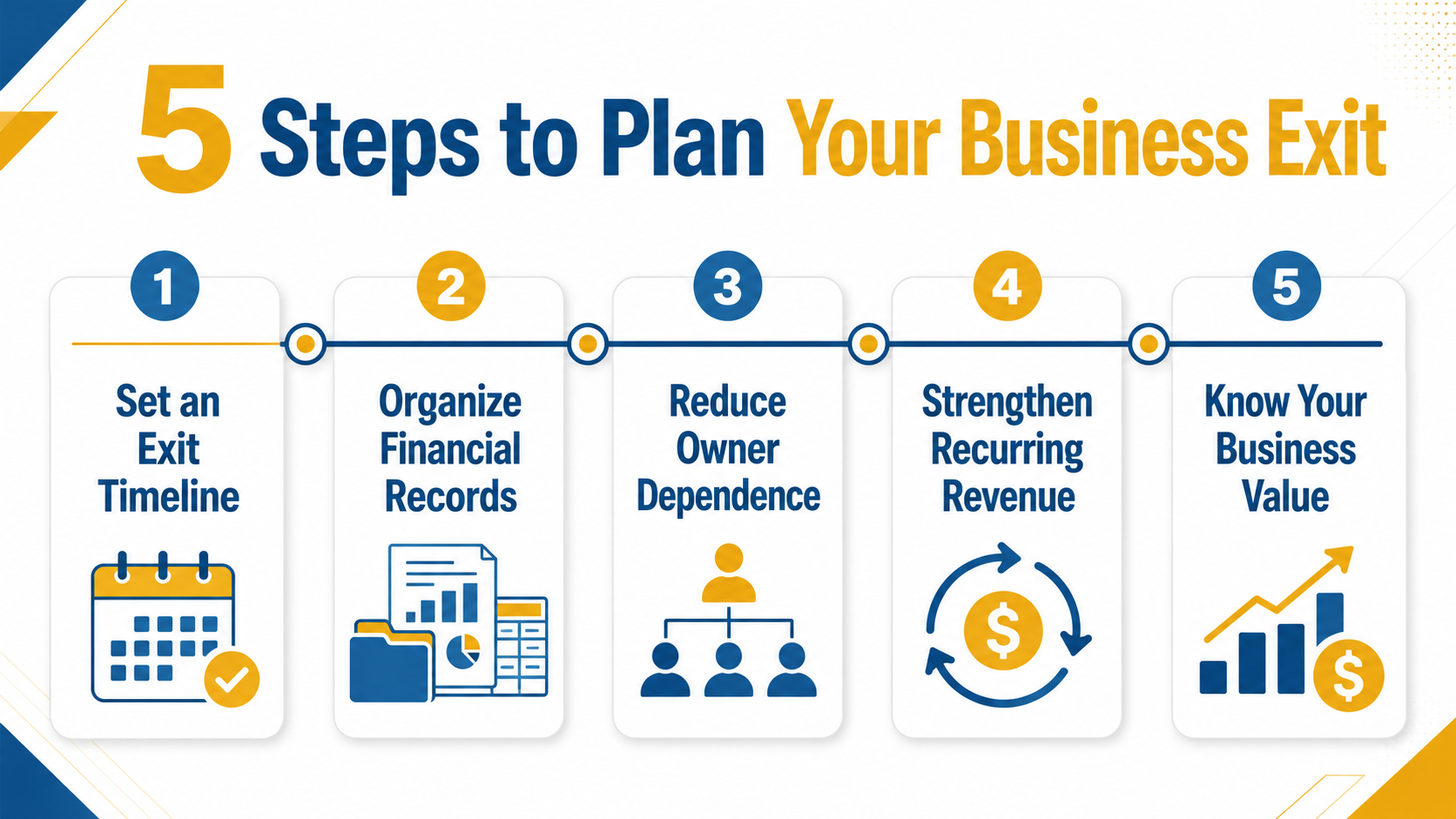
Your timeline influences nearly every preparation decision. If you expect to sell within the next 12 to 24 months, focus on improvements that buyers can verify before the business goes to market. If your timeline is longer, you may have opportunities to strengthen management, improve profitability, expand recurring revenue, or make operational investments that increase long-term value.
Defining a target exit window also helps coordinate conversations with your accountant, attorney, business broker, and other advisors before the sale process begins.
Financial records are often the first information buyers review. Income statements, tax returns, payroll reports, customer concentration data, and other supporting documents should present a consistent picture of how the business performs.
Preparing those records in advance allows owners to identify reporting issues, reconcile discrepancies, and answer questions before buyers begin due diligence. It also reduces delays once confidential information starts being shared with qualified buyers.
Many pest control businesses rely heavily on the owner's relationships, technical expertise, or daily decision-making. Buyers typically want to understand how the business will operate after that owner is no longer involved.
Look for responsibilities that can be delegated to office managers, operations managers, or experienced technicians. Documenting procedures, standardizing workflows, and giving employees greater responsibility over time can make the transition easier for both buyers and staff.
Recurring service agreements are often one of the most attractive characteristics of a pest control business because they provide predictable revenue and improve cash flow visibility.
Before going to market, review customer retention, renewal rates, pricing, and service profitability. A stable customer base supported by consistent pricing and reliable service is generally more attractive than rapid growth driven by one-time treatments or heavily discounted contracts.
A professional business valuation does more than estimate a selling price. It provides an objective assessment of how buyers are likely to evaluate your business based on its financial performance, operational strengths, customer base, and potential risks.
Obtaining a valuation before beginning the sale process also gives owners time to address issues that could affect negotiations. Instead of guessing what buyers might question, you can prioritize improvements that have the greatest impact on buyer confidence and overall marketability.
Requesting a confidential Business Valuation before going to market can also help establish realistic expectations and provide a clearer picture of how buyers are likely to evaluate your business today.
Read More: What Home Services Businesses Are Worth in 2026: Valuation Multiples and Key Value Drivers
Exit planning is an investment in the quality of the business buyers will evaluate. Owners who begin preparing 12 to 24 months before a sale have more time to improve profitability, strengthen transferability, reduce operational risk, and present a business that buyers can understand and confidently acquire.
While no two transactions are identical, buyers consistently value businesses with predictable cash flow, experienced employees, organized financial reporting, and systems that allow operations to continue after the owner exits. Those strengths can influence valuation, deal terms, and the likelihood of reaching a successful closing.
Key Takeaways
Begin exit planning at least 12–24 months before your intended sale.
Focus on improving cash flow, recurring revenue, and operational consistency rather than revenue growth alone.
Reduce owner dependence by documenting processes and developing employees who can operate the business independently.
Prepare financial records and due diligence materials well before going to market.
Obtain a professional business valuation to identify opportunities to strengthen buyer confidence and establish realistic expectations before listing your business.
Whether you're planning to sell in the next year or simply beginning to think about an eventual exit, Sunbelt Atlanta's Pest Control Business Brokers can help you evaluate your business, identify opportunities to improve transferability, and develop an exit strategy based on your goals and current market conditions. Starting the planning process early gives you more time to make informed decisions and prepare your business for a successful sale.
Read Next: The Ultimate Guide to Selling a Home Service Business in 2026
Most pest control owners benefit from starting exit planning 12 to 24 months before they expect to sell their business. That timeline provides an opportunity to improve profitability, strengthen recurring revenue, organize financial records, reduce owner dependence, and address issues that buyers may identify during due diligence. Starting early also creates a roadmap for business improvements that can make the company more attractive to strategic buyers, individual acquirers, and private equity groups.
Buyers evaluate much more than annual revenue. They review adjusted EBITDA or Seller's Discretionary Earnings (SDE), recurring maintenance contracts, customer retention, commercial accounts, route density, technician stability, management depth, field service management systems, and the company's ability to operate without the owner's daily involvement. Together, these factors influence valuation, buyer confidence, and the structure of the acquisition.
Exit planning gives owners time to improve the factors buyers value most. Increasing cash flow, improving profit margins, strengthening recurring revenue, documenting operating procedures, investing in field service management software, and reducing owner dependence can make a business more transferable and reduce perceived risk. Those improvements often strengthen valuation, improve negotiating leverage, and support a smoother business sale.
Yes. A professional business valuation provides an objective assessment of what your pest control business is worth based on its financial performance, customer base, recurring revenue, operational strengths, and current market conditions. It also helps owners understand which business improvements could maximize value before going to market and establish realistic expectations before beginning the sale process.
The right time to sell depends on your personal goals, business performance, and current market conditions rather than a single point in the economic cycle. Businesses with high recurring revenue, stable commercial and residential customers, experienced employees, and consistent financial performance are generally better positioned to attract qualified buyers. Working with an experienced business broker or M&A advisor can help you evaluate whether now is the right time to sell and identify steps that could strengthen your position before taking the business to market.
 Doreen Morgan : Jul 27, 2026, 4:29:59 PM
Discover what's driving buyer demand for pool service businesses in 2026, what buyers look for before making an offer, and how current market...
 Doreen Morgan : Jul 17, 2026, 11:00:00 AM
Learn how to sell your cleaning business by avoiding 10 mistakes that reduce valuation, weaken buyer confidence, and delay a successful sale.
 Doreen Morgan : Jun 29, 2026, 11:45:01 AM
Learn how HVAC business owners can increase value, improve valuation multiples, and prepare to sell their HVAC business.