


11 min read
Want to Sell Your Business at Full Value? Start With Clean Financials
Buyers do not make offers based on hope. They make decisions based on your financials. If the numbers are weak, unclear, or disorganized, the deal...
11 min read
Doreen Morgan
:
Mar 26, 2026 9:59:59 AM
About half of the business sales fall through or are renegotiated due to issues uncovered in financial due diligence. For sellers, these numbers are the foundation of trust, leverage, and deal certainty.
Buyers approach financials with a risk-first mindset, searching for patterns, inconsistencies, and signals that either build confidence or trigger caution. If you are unfamiliar with how buyers scrutinize financials, you risk leaving value on the table or losing a deal entirely.
This article explains the financial red and green flags buyers always notice, how to prepare for scrutiny, and what you can do now to protect your outcome.
This guide covers:
P.S. A confidential review of your financials can reveal issues before buyers do, giving you time to fix problems and strengthen your position. Sunbelt Atlanta’s advisors have managed over 1,200 successful sell-side transactions, guiding business owners through every stage of the process with strict confidentiality and no upfront fees.
If you want to avoid costly surprises and maximize your sale, contact us to review your numbers.
|
Area Evaluated |
What to Do and How to Verify |
|
Revenue Trends |
Document 3–5 years of monthly revenue, explain seasonality, and reconcile to tax returns and bank statements. |
|
Profit Margins & EBITDA |
Prepare a detailed add-back schedule with receipts, label each as one-time or recurring, and tie to documentation. |
|
Cash Flow & Working Capital |
Map monthly cash inflows/outflows, show working capital needs, and provide a 12-month trailing cash flow summary. |
|
Debt & Liabilities |
List all debts with lender, balance, rate, maturity, and covenants; provide payoff letters and recent statements. |
|
Customer Concentration |
Present a 12-month customer sales report, highlight top accounts, and show retention or mitigation plans. |
|
Documentation Transparency |
Cross-check P&L, balance sheet, and cash flow with tax returns, bank statements, and AR/AP aging reports. |
|
Tax Compliance |
Provide 3–5 years of filed tax returns, resolve outstanding issues, and document any audits or payment plans. |
|
Preparation Timeline |
Start the cleanup 12–18 months before the sale, lock in documentation 3–6 months out, and finalize a buyer-ready data room. |
Buyers treat business financials as both a risk filter and a negotiation tool. Their goal is to confirm that reported earnings are real, repeatable, and defensible. When numbers are inconsistent, poorly documented, or hard to explain, buyers slow down, expand their diligence, and often demand price reductions or stricter terms.
The stakes are high: a single red flag can shift the balance of power, delay closing, or even kill a deal. Sellers who understand this dynamic can prepare their financials to withstand scrutiny, speed up the process, and protect their valuation.
Buyers also use financials to test the credibility of the seller and the business’s operational maturity. Clean, reconciled numbers signal strong management and lower risk, while gaps or inconsistencies raise questions about what else might be hidden.
For more on preparing your financials, see Want to Sell Your Business at Full Value? Start With Clean Financials.

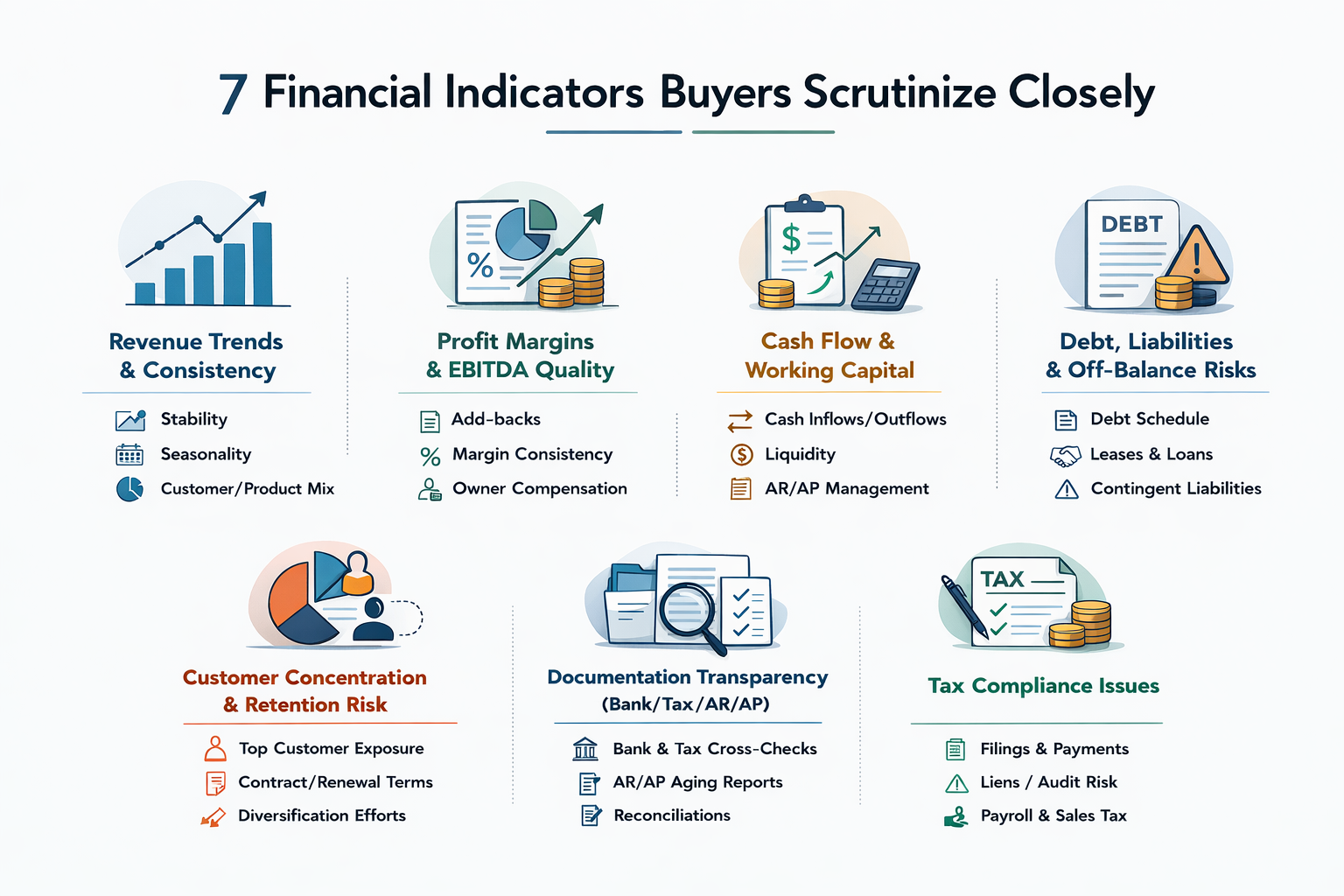
Buyers evaluate business financials through a series of focused lenses, each designed to uncover risk, validate value, and test the sustainability of earnings. Understanding these dimensions and preparing for them can mean the difference between a smooth sale and a deal that falls apart in diligence.
Buyers want to see stable, predictable revenue that can be explained and verified. They look for patterns and seasonality. Any sudden spikes or drops could signal risk. Inconsistent or declining revenue often triggers deeper questions and can lead to price reductions or additional deal protections.
Revenue documentation and explanation: Prepare monthly revenue reports for at least three years, highlight seasonality, and explain any major changes. Buyers will compare these to tax returns and bank statements to confirm accuracy.
Seasonality and one-time events: Identify and explain any seasonal swings or one-time revenue events. If a large contract or project inflated a particular period, document it and clarify whether it is repeatable.
Customer and product mix: Break down revenue by customer and product line to show diversification. High concentration in a single customer or product is a red flag unless mitigated.
Verification process: Buyers will request bank statements, tax returns, and AR reports to cross-check reported revenue. Any gaps or mismatches will be challenged.
EBITDA is a common anchor for valuation, but buyers rarely accept reported EBITDA at face value. They recalculate it, scrutinize add-backs, and look for margin swings that could signal operational or accounting issues.
| Area of Focus | What Buyers Check & Why | Seller Action: How to Prepare and Defend |
|---|---|---|
| Add-back Documentation | Buyers require proof for every add-back and remove those that are unsupported or unclear. | Build a schedule, labeling each add-back as one-time or owner-specific, and attach receipts or contracts for each. |
| Margin Consistency | Buyers look for stable margins and question any sudden swings or unexplained changes. | Prepare a margin trend report and provide a short written explanation for any major shifts. |
| Owner Compensation | Buyers adjust for owner salary and perks to reflect market rates and true profitability. | Separate owner pay and discretionary expenses from operating costs, and provide payroll records as support. |
| Non-operational Items | Buyers exclude income or expenses that don’t reflect ongoing business performance. | Remove non-operational items from EBITDA and briefly explain any unusual entries. |
| Recurring vs. One-Time | Buyers are skeptical of recurring add-backs labeled as one-time adjustments. | Clearly distinguish recurring from one-time adjustments and provide documentation for each. |
A well-documented, defensible EBITDA calculation is one of the most effective ways to protect your valuation and reduce negotiation friction. Sellers who prepare in advance can answer buyer questions quickly and maintain leverage throughout the deal process.
Buyers focus on cash flow to assess the business’s ability to fund operations, service debt, and withstand volatility after closing. They want to see that cash inflows and outflows are predictable and that working capital needs are well understood.
A clear, month-by-month cash flow summary for the trailing 12–36 months helps buyers see how the business manages liquidity. Buyers will look for unexplained cash shortfalls, large swings in AR/AP, or evidence that the business is undercapitalized.
Sellers should be prepared to explain any unusual patterns and provide documentation for major cash movements. Mapping out working capital requirements and showing how they are funded (through operations, lines of credit, or owner contributions) builds buyer confidence and reduces the risk of last-minute surprises.
Debt isn’t always a deal-breaker, but unclear or hidden liabilities are. Buyers want to know exactly what they’re inheriting, including any loans, leases, or contingent liabilities that could impact future cash flow.
A detailed debt schedule is essential. List each lender, the original and current balance, interest rate, maturity date, and any covenants. Buyers use this information to assess repayment risk and determine how debt will affect deal structure and post-sale operations. Supporting documentation, such as recent statements and payoff letters, should be readily available.
Off-balance-sheet items, such as leases, guarantees, or contingent liabilities, must be disclosed and supported with documentation. Buyers will scrutinize these for hidden risks that could lead to price reductions or escrow requirements. Clearly explain how and when each debt will be paid off, and clarify whether any obligations must be settled at closing or can be transferred. Buyers want to avoid surprises that could disrupt operations after the sale.
Sellers who provide a transparent, organized view of all liabilities build trust and reduce the risk of last-minute deal changes. Proactive disclosure and clear documentation can help maintain momentum and keep negotiations on track.
Customer concentration is a critical area of focus for buyers because it directly affects the stability and predictability of future revenue. When a single customer accounts for more than 20–25% of total sales, buyers will want to see clear evidence that these relationships are secure and that the business is not overly dependent on a single source of income.
To address this, sellers should prepare a comprehensive sales report covering the past 12 to 36 months, breaking down revenue by customer and highlighting the status of top accounts. This report should include contract terms, renewal dates, and any recent changes in customer engagement.
Retention documentation is equally important. Buyers will look for renewal rates, the length and terms of customer contracts, and any actions taken to strengthen key relationships. If there are long-term agreements in place, provide copies and be prepared to discuss the likelihood of renewal or extension. For customers without contracts, demonstrate the history of repeat business and any steps taken to formalize these relationships.
Mitigating customer concentration risk is a proactive process. If your business relies heavily on a small number of customers, document your efforts to diversify the customer base or secure longer-term commitments from existing clients.
This might include outreach to new markets, the addition of new service lines, or targeted marketing campaigns. Presenting a clear plan to reduce reliance on any single customer reassures buyers and can help preserve your valuation during negotiations.
Buyers cross-check financial statements with bank records, tax returns, and AR/AP aging reports to confirm accuracy and spot inconsistencies. Gaps or mismatches are immediate red flags.
A transparent documentation trail is essential. Sellers should maintain monthly reconciliations between P&L, balance sheet, and cash flow statements, and ensure that all figures tie back to supporting documents. Buyers will request AR/AP aging reports, bank statements, and tax filings to verify reported numbers. Any discrepancies will be challenged and can slow down or derail the deal.
|
Area |
Buyer Verification Step |
Seller Preparation Action |
|
Revenue |
Compare P&L to bank deposits and tax returns |
Reconcile monthly, document variances, and prepare explanations |
|
AR/AP |
Review aging reports for accuracy and reasonableness |
Update reports, resolve old balances, and document write-offs |
|
Cash Flow |
Trace large cash movements to supporting invoices or contracts |
Maintain a cash flow log and attach backup for major items |
|
Tax Compliance |
Match tax filings to financial statements and payment records |
Provide copies of returns, payment confirmations, and notices |
Tax problems are a major red flag for buyers. They’ll check for late filings, tax liens, or audit risk, and may require escrow or price reductions if issues are found.
Buyers will request all recent tax filings, look for any outstanding notices, and may even contact your accountant for verification. To prepare, gather all tax documents, resolve any open issues, and be ready to explain your tax position. If you have a history of late filings or unresolved audits, address these before going to market.
In addition to federal and state income taxes, buyers will scrutinize payroll, sales, and use tax compliance. Any missed or late payments in these areas can trigger additional diligence and may result in buyers holding back funds until issues are resolved. Sellers should ensure that all payroll and sales tax filings are current, with payment confirmations and supporting documentation available for review.
Transparency is essential when it comes to tax matters. If there are any payment plans, ongoing audits, or disputes with tax authorities, disclose them early and provide documentation showing how they are being managed. Proactive resolution of tax issues not only builds buyer confidence but also reduces the risk of delays or renegotiations during the closing process.
For more on documentation and compliance, see The Importance of Confidentiality Agreements in Business Transactions.

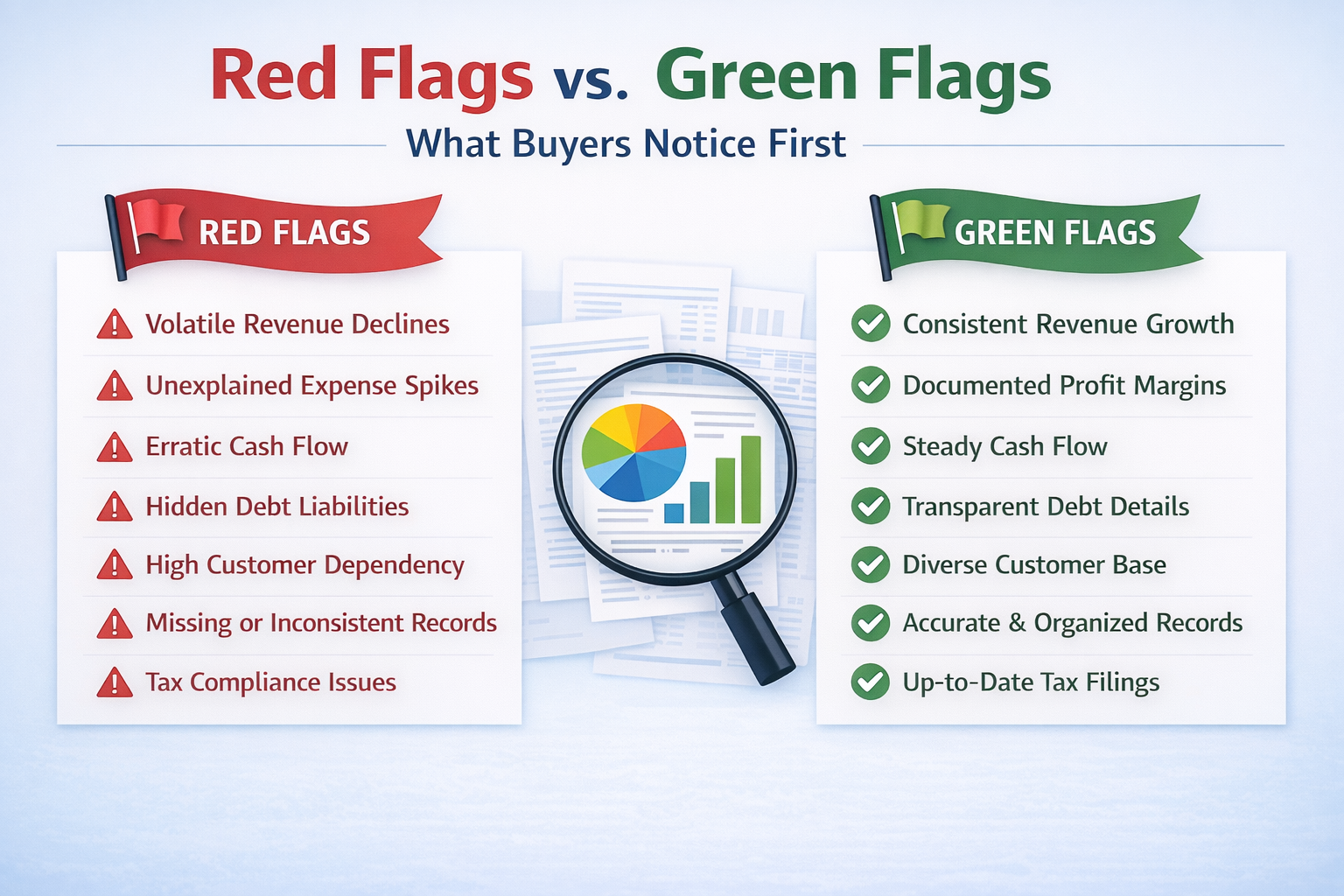
Buyers form first impressions quickly, often within the first review of your financials. Understanding the difference between red and green flags in each financial area helps you anticipate concerns and address them before they become deal-breakers.
| Area | Red Flag Example | Seller Action: What Buyers Want and How to Achieve It |
|---|---|---|
| Revenue | Revenue swings with no clear cause or unexplained declines in key periods. | Prepare a 3–5 year monthly revenue summary. Annotate all anomalies, explain seasonality or spikes, and reconcile to tax returns and bank statements. Buyers want to see stable trends and clear explanations for any changes. |
| Profit Margins/EBITDA | Add-backs lack proof, or margins change sharply without explanation. | Build a detailed add-back schedule with receipts or contracts for each item. Prepare a margin trend report and provide written explanations for any major shifts. Buyers expect documentation and consistency. |
| Cash Flow | Cash shortfalls at quarter-end, or large unexplained withdrawals. | Prepare a rolling 12–36 month cash flow statement. Highlight working capital needs, document major movements, and show how cash is managed during slow periods. Predictability and planning are key for buyers. |
| Debt/Liabilities | Loans not listed, balloon payments due soon, or off-balance-sheet risks hidden. | List every debt and lease, including lender, balance, rate, maturity, and covenants. Provide payoff letters and explain how each will be handled at or before closing. Full disclosure and documentation build trust. |
| Customer Concentration | One customer >30% of sales, no contract or renewal plan. | Provide a customer sales breakdown for the past 12–36 months. Attach key contracts, document renewal rates, and show efforts to diversify or secure long-term relationships. Buyers want to see retention and risk mitigation. |
| Documentation | Financials, tax returns, and bank statements don’t match, or AR/AP is missing. | Reconcile all financials monthly, update AR/AP aging, and create a checklist showing how each document ties to supporting records. Buyers expect a clear audit trail and no gaps in documentation. |
| Tax Compliance | Unfiled returns, open audits, or undisclosed tax payment plans. | Gather 3–5 years of tax returns, resolve open items, and prepare a summary with payment confirmations and supporting documents. Buyers want to see that all filings are current and no unresolved issues. |
Preparing your financials for buyer review is a proactive process that can significantly improve your negotiation leverage and deal certainty. Sellers who start early and follow a structured plan are better positioned to defend their numbers and avoid last-minute surprises.
A successful sale often starts 12–18 months before going to market. Early preparation allows time to fix issues, gather documentation, and build a defensible narrative for your numbers. Sellers should prioritize cleaning up revenue and margin inconsistencies, reconciling all accounts, and documenting add-backs well in advance.
As the sale approaches, focus shifts to finalizing documentation, preparing a buyer-ready data room, and rehearsing responses to likely buyer questions.
Sellers should approach preparation as a series of concrete steps, each designed to reduce risk and build buyer confidence. This includes reconciling all financial statements, documenting every add-back, preparing customer and vendor reports, and resolving any outstanding tax or legal issues.
Organizing these materials in a secure, confidential data room streamlines the diligence process and signals professionalism to buyers.
Many sellers underestimate the complexity of buyer scrutiny and the time required to prepare. Engaging a professional advisor early can help identify hidden risks, prioritize cleanup efforts, and ensure that documentation meets buyer expectations. Advisors can also manage confidentiality, screen buyers, and guide negotiations to protect your interests throughout the process.
For more on preparing for diligence, see How to Build an Exit Timeline That Maximizes Your Business Sale.
Buyers use financial scrutiny to protect themselves, but sellers who prepare can use the same process to build trust and defend value. Clean, well-documented financials speed up diligence, reduce the risk of retrades, and give you leverage in negotiations. The earlier you start, the more control you have over the outcome.
Self-audit your financials: Reconcile every statement, document add-backs, and prepare explanations for any anomalies before buyers ask. This reduces the risk of last-minute surprises and strengthens your negotiating position.
Build a buyer-ready data room: Organize all key documents—financials, tax returns, contracts, debt schedules, and compliance records—in a secure, confidential space. This streamlines diligence and signals professionalism.
Know when to get help: If you are unsure about any aspect of your financials or the sale process, seek a confidential review with an experienced advisor. Early intervention can prevent costly mistakes and protect your valuation.
As you move toward a sale, the right preparation can turn buyer scrutiny into a source of leverage rather than a hurdle.
Sunbelt Atlanta’s advisors bring more than 90 years of combined experience and have closed over 1,200 sell-side transactions across virtually every industry. Our team manages the entire process confidentially, from initial review through closing, with no upfront fees and a proven track record of protecting seller interests.
Contact us to review your numbers to avoid want to avoid costly surprises and maximize your sales.
Buyers typically request 3–5 years of profit and loss statements, balance sheets, and cash flow statements, along with tax returns, bank statements, AR/AP aging reports, debt schedules, lease agreements, and documentation for any legal or tax issues. Each document should be reconciled for consistency and organized in a way that allows buyers to verify information quickly.
Buyers verify revenue by cross-checking profit and loss statements with bank deposits, tax returns, and accounts receivable reports. They look for consistency across all sources and will challenge any unexplained variances or gaps. Providing a clear reconciliation and narrative for any anomalies helps build trust and speeds up the process.
Common red flags include declining or inconsistent revenue, large unsupported add-backs, unexplained margin swings, hidden debt, high customer concentration, missing documentation, and unresolved tax issues. These signals prompt buyers to dig deeper, slow down the process, or demand price reductions.
Start by reconciling all financial statements, documenting every add-back, and preparing detailed customer and vendor reports. Address any outstanding tax or legal issues, and organize all documents in a secure data room. Early preparation and professional guidance can significantly improve your outcome.
High customer concentration increases risk for buyers, as the loss of a single major customer can significantly impact revenue and profitability. Buyers look for diversified customer bases or long-term contracts with key accounts. Sellers should document retention rates and present a plan to reduce concentration risk.
Errors in financials can delay closing, trigger additional diligence, or lead to price reductions and escrow holds. In some cases, significant errors or inconsistencies can cause buyers to walk away from the deal. It is critical to identify and fix errors before going to market to protect your valuation and deal certainty.
11 min read
Buyers do not make offers based on hope. They make decisions based on your financials. If the numbers are weak, unclear, or disorganized, the deal...
9 min read
When you decide to sell your business, your initial "teaser" document may generate interest. But to turn that interest into concrete offers,...
17 min read
What causes most small business sales to fall apart after an offer is accepted? According to data from Axial, nearly 70% of failed transactions break...